Japanese-Style Iced Pour-Over: The Gear You Need for Flash Brewing
Flash brewing means brewing hot coffee straight onto ice. It needs very little gear beyond a normal pour-over kit, but a few small choices make it easier and less messy.
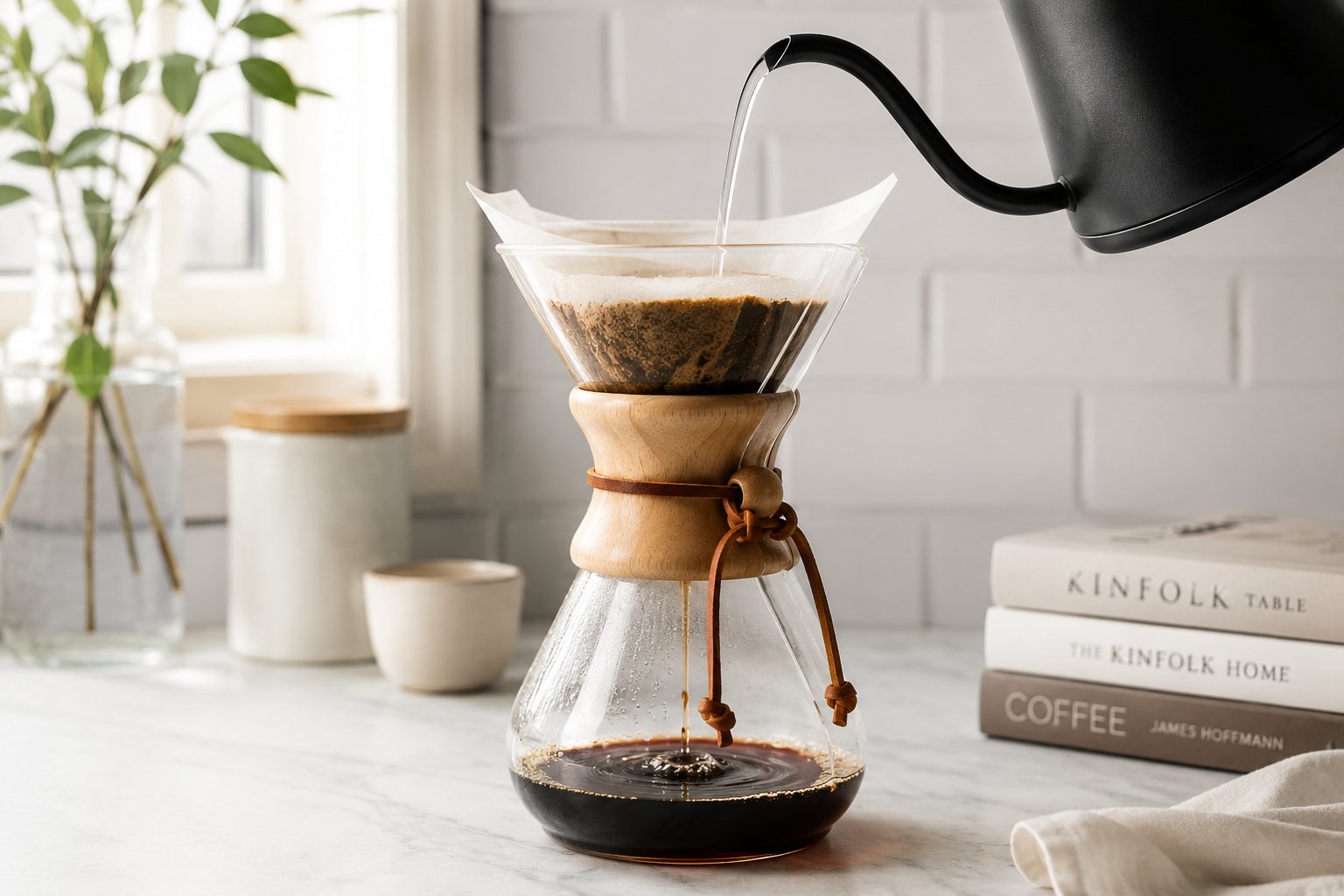
Affiliate disclosure: CoffeeGear is reader-supported. When you buy through links on our site, we may earn a commission at no extra cost to you. We don't list prices because they change, so check the current listing and the seller's return window before you order.
Japanese-style iced pour-over means brewing hot coffee with a pour-over dripper directly onto ice, so the coffee chills as it drips. The gear you need is a dripper and filters, a gooseneck kettle, a scale, a heat-safe server and a supply of ice, plus a grinder if you grind fresh. Most of it is what you already own for hot pour-over.
This guide explains how the method differs from cold brew, what each piece of gear does and what to look for when you buy. It does not give a recipe with fixed ratios, because those depend on your dripper, your coffee and your taste. Use your dripper maker's or your roaster's recipe as the starting point.
How flash brewing differs from cold brew
Cold brew steeps coffee in cold or room-temperature water for hours. Japanese-style iced coffee brews hot, in minutes, and the ice does the chilling. Because part of the total water is ice instead of hot water, you brew with less hot water than a normal cup would use, and the ice melts into the coffee as it drips.
The result is a different cup. Cold brew is usually smoother and softer, while flash-brewed coffee keeps more of the brightness and aroma of a hot brew. If you prefer the slow route, our cold brew maker guide covers it.
The gear, piece by piece
| Gear | Job | What to check |
|---|---|---|
| Dripper and paper filters | Holds the coffee and sets the flow | Match the filter to the dripper; see the filter section below |
| Gooseneck kettle | Lets you pour slowly and exactly | A spout you can control, and a handle you can hold with a full kettle |
| Scale with a timer | Weighs coffee, hot water and ice | Enough capacity for the server and ice; a clear display; a timer |
| Heat-safe server | Catches hot coffee and holds the ice | Whether the maker says it can take hot liquid on ice; enough volume for the ice and the coffee |
| Ice | Chills the coffee as it drips | Clean ice, in cubes that melt at a rate you like |
| Grinder | Sets the grind | Even grind and steps fine enough to adjust |
If you do not yet own a pour-over kit, our pour-over setups guide lists what goes together.
The dripper and the filter
Any pour-over dripper can do flash brewing. A cone dripper is popular, and our V60 guide shows how a standard hot brew goes, which is the same technique you will use here. The only change is that you weigh the ice into the server first and brew less hot water.
The filter matters because a cone that does not fit properly can slow the drain or let water bypass the coffee. If you are unsure which pack fits your dripper, see our paper filter size guide. If you are weighing paper against reusable options, our filter material comparison explains how each changes the cup.
Paper filters sized for your dripper
Check the name or size on the dripper and match the pack, rather than guessing by cup count.
The server: the piece people get wrong
The server has to hold the ice, the coffee that drips through and some room to swirl. It also has to take hot liquid hitting ice and cold glass or metal. Check the maker's description to see whether the server is described as heat-safe, and whether it has any warning about sudden temperature changes. If it does not say, ask before you try it.
- Volume. Leave room so the server does not overflow when the ice melts and the coffee collects.
- A pouring spout. It makes the final pour into a glass easier.
- A stable base. A server that tips when you fill it with ice is a spill waiting to happen.
- Easy cleaning. A wide opening is easier to rinse than a narrow neck.
A heat-safe glass server or carafe
Look for a description that says it is heat-safe and has room for ice plus the brewed coffee. Check the dripper rests on it securely.
The scale and the kettle
A scale lets you weigh the coffee, the hot water and the ice, which is how you keep a recipe repeatable. A timer helps you watch your pour time. Check that the scale's weighing range covers the server with its ice, and that the platform is large enough for the base. Our scale guide explains the features that matter.
A gooseneck kettle gives you a thin, steady stream. That helps you wet the coffee evenly and keep the pour slow. If you are choosing one, see our gooseneck kettle guide, and keep it clean with the care steps in your manual.
A coffee scale with a timer
Check that it can hold your server plus ice and that the display is easy to read at a glance.
Ice, grind and common mistakes
Ice is part of the recipe, not an afterthought. Use clean ice made from water you would drink, and weigh it so the recipe stays consistent. Smaller cubes melt faster than large ones, which changes the dilution, so pick one size and stay with it.
- Weighing by eye. A scoop of ice is not a measurement. Weigh the ice, then the water.
- Brewing the full amount of hot water. The ice is part of the total, so use less hot water as your recipe says.
- Changing too much at once. Change the grind or the pour time, not both, so you can tell what helped.
- Using a server that is not heat-safe. Check the maker's notes before you pour hot coffee onto ice.
- Leaving the drain slow. If the dripper takes much longer than a hot brew, check the filter fit and the grind. Grind advice varies by recipe, so follow yours rather than a rule of thumb.
A simple way to start
- Pick one dripper and one recipe from the maker or your roaster.
- Weigh the ice into the server and set the dripper on top.
- Weigh your coffee, grind it and place it in a rinsed filter.
- Pour the hot water in stages and let the coffee drip onto the ice.
- Swirl the server when the drip stops, pour over fresh ice if you like and taste.
- Adjust one thing at a time on the next brew.
If you want to expand the kit later, a second server, extra filters and a few reusable glasses are the most useful additions. A good grinder matters most of all. Our grinders by budget guide compares options.
Frequently asked questions
What is Japanese-style iced pour-over?
It is a pour-over brewed hot directly onto ice, so the ice chills the coffee as it drips. It uses less hot water than a normal brew because the ice is part of the total.
Is flash brewing the same as cold brew?
No. Cold brew steeps for hours in cold or room-temperature water. Flash brewing uses hot water and ice, and takes minutes.
Do I need special gear for iced pour-over?
Not much. A normal pour-over kit with a scale and a heat-safe server is enough, plus ice. Check the maker's notes on what the server can take.
Can I use any glass carafe for hot coffee on ice?
Only if the maker describes it as heat-safe and does not warn against sudden temperature changes. If it does not say, ask before you try.
Should I change my grind for iced pour-over?
Many recipes adjust it, but the direction depends on the recipe and the dripper. Start with the recipe, then change one variable at a time.
- This article is general brewing guidance. It gives no ratios, temperatures, brew times or product specifications, because those depend on your dripper, coffee and recipe. Start from your dripper maker's or roaster's recipe.
- Check the maker's description of any server for heat safety and temperature-change warnings, and your kettle and scale manuals for care and capacity.