Espresso Puck Screens: Do They Help or Just Add a Step?
A puck screen is a thin metal mesh disc that sits on top of the coffee in the basket. It adds a step, so judge it by what it changes in your routine and your cleanup, not by the hype.
Affiliate disclosure: CoffeeGear is reader-supported. When you buy through links on our site, we may earn a commission at no extra cost to you. We don't list prices because they change, so check the current listing and the seller's return window before you order.
A puck screen is worth trying if your shower screen gets coated in grounds after each shot, if you want to cut down on group head cleanup, or if you like adding a repeatable prep step. It will not rescue a poor grind or a sloppy dose, and it adds one more thing to place, remove and wash.
This guide explains what a puck screen is, what it plausibly changes, what it does not, how to match one to your basket and how to test whether it earns a place in your routine. It makes no claims about taste, because the effect on the cup varies with the machine, the coffee and the person.
What a puck screen is
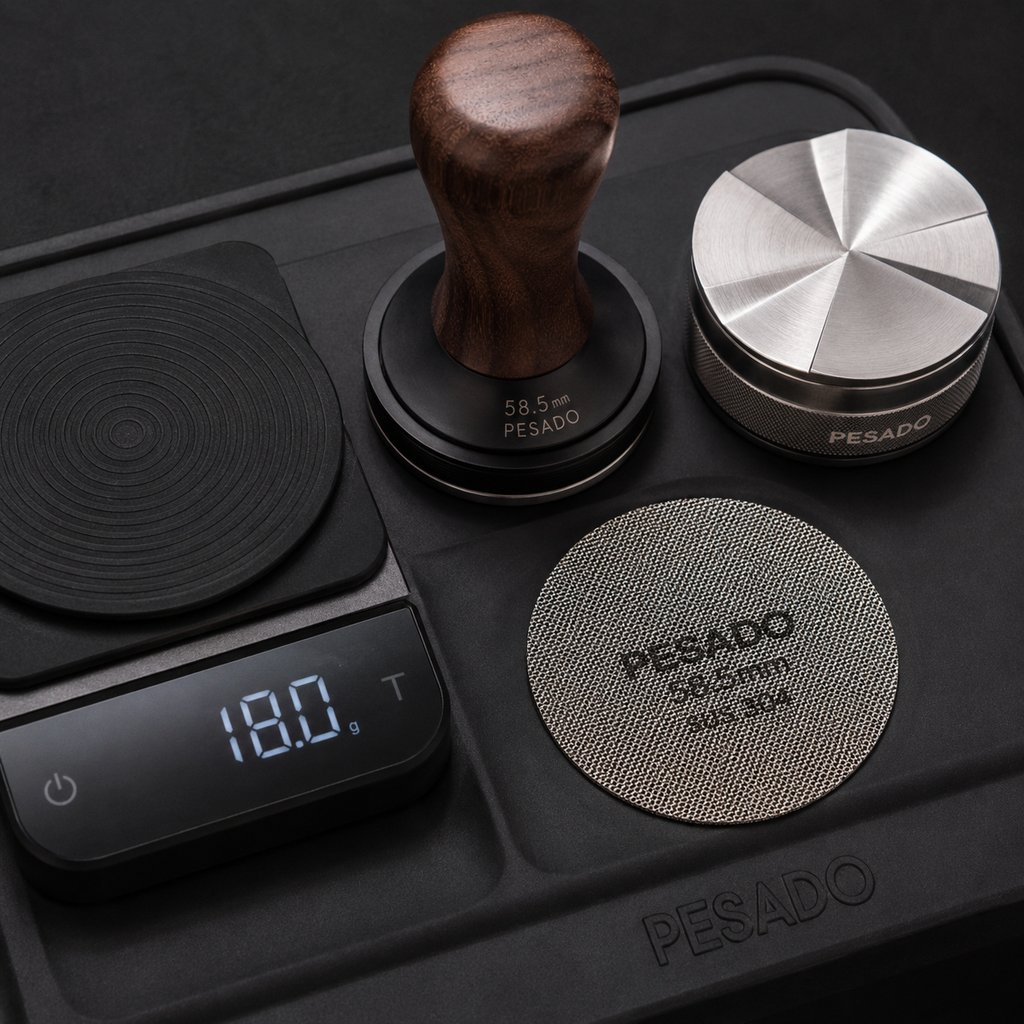
It is a thin disc of metal mesh that you place on top of the coffee puck after you have dosed and tamped, before you lock the portafilter into the group. The idea is that the mesh sits between the coffee and the machine's shower screen. When you pull the shot, water passes through the mesh on its way to the coffee.
Because it sits on the puck, it takes up some of the space between the puck and the shower screen. That space matters on some machines and baskets, and it is one of the first things to check. Product pages describe the benefits in different ways, so read the product page and compare it with what you actually see in your own kitchen.
What it might change
| Area | What a screen may change | What to watch for |
|---|---|---|
| Shower screen cleanliness | Grounds may stick to the mesh instead of the shower screen, so the shower screen stays cleaner between backflushes | You now clean the mesh instead, and it can clog or hold oils |
| Water distribution | The mesh may spread water more evenly across the puck | This is a common claim on product pages; the effect in your cup may be small or hard to notice |
| Puck surface | The surface may look cleaner when you knock out the puck | A stuck screen can lift part of the puck or leave marks |
| Workflow | One more step in a fixed routine, which some people like for consistency | One more thing to wash and keep track of |
Treat the benefits as possible, not guaranteed. A change in shot time or taste after you add a screen can come from the screen, but it can also come from a slightly different dose or tamp that day. If you want to know whether it matters to you, change only one thing at a time.
What it does not fix
- A poor grind or the wrong dose. A mesh does not correct either.
- Channeling from uneven distribution. Prepping the puck evenly comes first. Our guide to WDT tools and puck prep covers that step, and the WDT tool roundup compares the options.
- A machine problem. Water flow, temperature and pressure belong to the machine. Check your manual if something seems off.
- A dirty group head. A screen may help you keep it cleaner, but it does not replace a regular backflush where your machine supports it.
Sizing: the part that decides whether it works
A puck screen is made to fit a basket diameter, so a screen that does not match your basket will either rattle around or sit crooked. Look up your portafilter and basket size in your manual or on the maker's page, and buy a screen listed for that size. Do not rely on a guess from the machine's brand alone.
- Basket diameter. Match the screen to the basket, not to the group head.
- Thickness and headspace. A screen takes up vertical room. If you fill the basket right to the top or your machine leaves little space above the puck, check that the screen does not touch the shower screen while the portafilter is locked.
- Pressurized baskets. If your basket is the pressurized kind, check the screen's maker before you buy, since the basket works differently. Our basket guide explains the difference.
- Material. Look for a description of the metal and mesh, and a care note. Rinse and dry the screen after use, and follow the maker's care instructions.
A puck screen in your basket size
Check the listed diameter against your basket and read what the maker says about care. Avoid screens that do not state a size.
A group head or shower screen cleaning brush
Useful with or without a puck screen. Pick a brush your machine's manual allows near the group.
Is it worth the extra step?
Use this as a rough guide.
- Try one if your shower screen is regularly clogged with grounds, you want a tidier puck, or you enjoy refining your routine and have room above the puck.
- Skip it if your machine has little headspace, you are still learning to dose and tamp consistently, or you would rather keep the routine short.
- Do not buy it to solve sour or bitter shots. Look at grind, dose and temperature instead, or read our dialing-in guide.
The cleanup trade in practice
The main honest argument for a screen is housekeeping. Instead of scrubbing grounds out of the shower screen, you rinse a mesh disc. That is a fair swap if the mesh is quick to clean and the shower screen really does stay cleaner. It is a poor swap if you end up rinsing both.
Think about where the disc lives. If you rinse it at the sink and leave it to dry on the counter, it is one more small part to lose. Some people keep it on the tamping mat or beside the grinder so it becomes part of the routine. Whichever way you go, a disc that sticks to the puck needs a gentle lift with a finger or a tool the maker allows, not a prying knife that could scratch your basket.
How to test it fairly
- Pull a few shots without it and note your dose, time, taste and how clean the shower screen looks.
- Add the screen and change nothing else. Use the same dose and grind.
- Compare cleanup and the puck after each shot, and taste when you are not rushed.
- Keep it only if it improves something you care about, such as a cleaner group head. Otherwise remove it and save the step.
Cleaning matters here. Rinse the screen after use, and follow the maker's instructions for deeper cleaning. If you have also just cleaned a steam wand, our steam wand guide sits alongside this routine, and the cleaning supplies guide covers what to keep near the machine.
Frequently asked questions
Do puck screens improve espresso?
Product pages commonly say they can help distribute water and keep the shower screen cleaner. The effect on taste varies, so test one by changing only that variable.
Will a puck screen fit my machine?
It fits a basket size, so match the screen to your basket diameter. Check that it leaves headspace under the shower screen when the portafilter is locked in.
Do I still need to backflush with a puck screen?
Check your machine's manual. A screen may reduce grounds on the shower screen, but it does not replace the cleaning routine the maker describes.
Can I use a puck screen with a pressurized basket?
Check the screen maker's advice before you buy. Pressurized baskets work differently, so do not assume a screen suits them.
How do I clean a puck screen?
Rinse it after each use and follow the maker's care instructions for deeper cleaning. Let it dry fully before you store it.
- This article is general guidance and makes no measured claims about puck screens. Statements about water distribution and cleanup are described as common product-page claims and what a screen may do, not as test results.
- Basket sizes, headspace and care steps vary by machine and by screen. Check your machine's manual for what it says about baskets and cleaning, and the screen maker's page for size and care.